Circular Economy, Integrated Water and Energy Management: Pillars of the CNIT Sustainability Agenda
•Circular Economy, Integrated Water and Energy Management: Pillars of the CNIT Sustainability Agenda Tequila Industry Companies Report Energy Savings of Up to 69%, Agroindustrial Waste Valorization, and Water Solutions
Guadalajara, Jalisco, June 4, 2026
CS08/CNIT
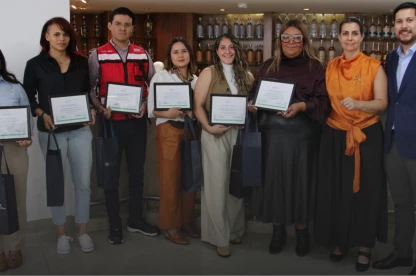
In observance of World Environment Day, the Chamber of the Tequila Industry (CNIT) held the first Sustainability and Best Practices Fair of the Tequila Agroindustry, a gathering that brought together member companies to share projects reflecting a transformation in the way Tequila is produced: consuming fewer resources, making better use of waste, and generating benefits for the communities where productive activities take place.
The initiatives presented demonstrated how sustainability has become a strategic pillar for strengthening the competitiveness of the production chain through solutions aimed at optimizing resources and reducing environmental impacts.
The results shared by participating companies reported energy savings of up to 69% and reductions of 40% in fuel consumption through process optimization, energy recovery, and biomass utilization. In some cases, up to 90% of the energy used came from renewable sources, significantly reducing dependence on fossil fuels and lowering the environmental footprint of operations.
Water Management
In terms of water management, companies presented projects focused on water treatment and reuse, rainwater harvesting for community benefit, and new technologies for the treatment of vinasse, one of the main by-products generated during Tequila production. They also shared progress in the use of constructed wetlands for wastewater treatment, an alternative based on natural processes that contributes to strengthening environmental compliance.
Likewise, one of the most relevant topics discussed throughout the event was the circular economy. Several companies presented models designed to utilize waste generated during Tequila production, achieving the valorization of up to 31% of the waste materials generated by their operations. Among the initiatives highlighted were projects that transformed bagasse and vinasse into new inputs, such as compost and other materials with environmental applications, giving these by-products a second life.
Also noteworthy was an alliance comprising more than 60 brands from the Tequila agroindustry that promotes the production of construction materials for community infrastructure using bagasse residues, demonstrating how collaboration can translate into tangible benefits for local communities.
For his part, Roberto Ciprés Cruces, President of CNIT, stated:
“Sustainability in the Tequila agroindustry is no longer measured solely by commitments, but by results. Today, we are seeing how innovation, collaboration, and the responsible use of resources are generating tangible benefits for the environment, communities, and the competitiveness of our production chain.”
Shared Efforts
Among the collaborative efforts presented were soil regeneration programs that make use of bagasse and sludge from wastewater treatment plants for compost production. One such project reported the application of 670 tons over the past two years, impacting more than 84 hectares of farmland in the municipalities of Amatitán, Tequila, and Tala, contributing to improved soil health, increased moisture retention, and enhanced carbon sequestration.
Joint initiatives also included environmental restoration projects and actions aimed at strengthening ecosystems associated with agave cultivation. Highlights included reforestation programs that enabled the planting of more than 50,000 trees over the past three years, with survival rates exceeding 80%, as well as regenerative agriculture strategies focused on soil conservation, water infiltration enhancement, and biodiversity improvement.
The event featured presentations by Miriam Moreno of Geocycle-Holcim and Carmelo Santillán Ramos of CSR Consulting, who discussed the role of industrial symbiosis as a tool for accelerating the circular economy. The specialists highlighted the potential of co-processing and energy recovery from agroindustrial waste, particularly agave bagasse, as an opportunity to reduce emissions, maximize resource utilization, and strengthen the competitiveness of the Tequila agroindustry.



Contact us to learn more about CNIT memberships.
We will guide you through the process, explain what it is, how it works and what is required to become a member.
Alliances


Sponsors